





Electroplating Blind Holes: Overcoming Fluid Stagnation & Trapped Air Challenges
Electroplating blind holes presents a unique electrochemical obstacle in precision surface finishing. Traditional plating methods frequently fail due to fluid stagnation and trapped micro-bubbles, which block solution contact and leave localized unplated voids inside the small internal cavity. Adopting an engineered solution for electroplating blind holes is essential to prevent internal corrosion and guarantee consistent metallic coverage across critical components.
Bubble Entrapment: Why Standard Methods Fail When Electroplating Blind Holes
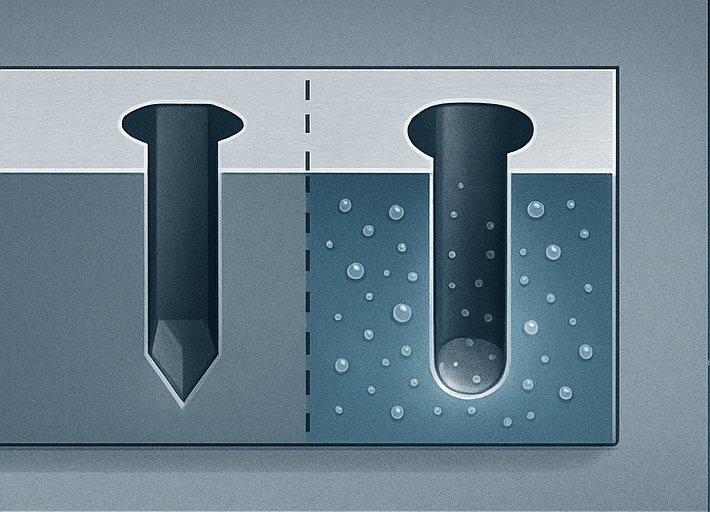
Without specialized process controls, process gases and trapped air cannot escape from deep micro-cavities during the plating cycle. When electroplating blind holes without specialized equipment, this gas pocket prevents the electrolyte from continuously contacting the metal substrate, leading to premature substrate exposure and severe thickness variation.
Key Failure Factors in Micro-Cavities
- Electrolyte Blockage: Trapped air pockets isolate the metal substrate from active plating chemicals.
- Thickness Variation: Incomplete chemical exchange causes severe coating depth inconsistencies.
- Substrate Exposure: Unplated internal micro-cavities become high-risk sites for localized oxidation and mechanical breakdown.
Method Comparison for Electroplating Blind Holes
| Plating Method | Fluid & Gas Exchange | Internal Corrosion Risk |
|---|---|---|
| Standard Electroplating | Poor (Trapped micro-bubbles & stagnation) | High (Unplated internal voids) |
| Engineered Solution | Continuous electrolyte contact | Zero (Consistent metallic coverage) |
Nearly 50 Years of Engineering Excellence: Your Surface Finishing Partner
Excel Components MFG Co., Ltd. leverages nearly 50 years of manufacturing experience to deliver robust, high-precision surface finishing methods.
Tailored Technical Support for Precision Plating
If your engineering team is facing quality challenges with internal corrosion when electroplating blind holes, contact Excel Components MFG Co., Ltd. today to secure an engineered solution and technical support tailored to your exact manufacturing requirements.