






One Fastener Can Shake an Entire Supply Chain
Supplier in-house spectrometer testing is quickly becoming the deciding factor in automotive parts procurement, even as price, lead time, and capacity continue to dominate the conversation. Fasteners are small, but they frequently sit at load-bearing points in a vehicle’s structure. When a material mix-up goes undetected, the result ranges from premature fatigue failure to structural failure, and in the worst cases, a full-scale vehicle recall.
For procurement and QA teams, this isn’t just a quality issue — it’s a risk management challenge tied directly to brand reputation and financial exposure. And the root of the problem often traces back to one question at the top of the supply chain: does this supplier actually have the capability to verify material themselves?
A Mill Certificate Is Not the Same as a Material Guarantee
Most procurement processes rely on a supplier-provided mill certificate as proof of acceptance. It looks official and often carries a stamp, but there’s a detail easy to overlook: it’s a one-sided declaration from the supplier, not an independently verified measurement.
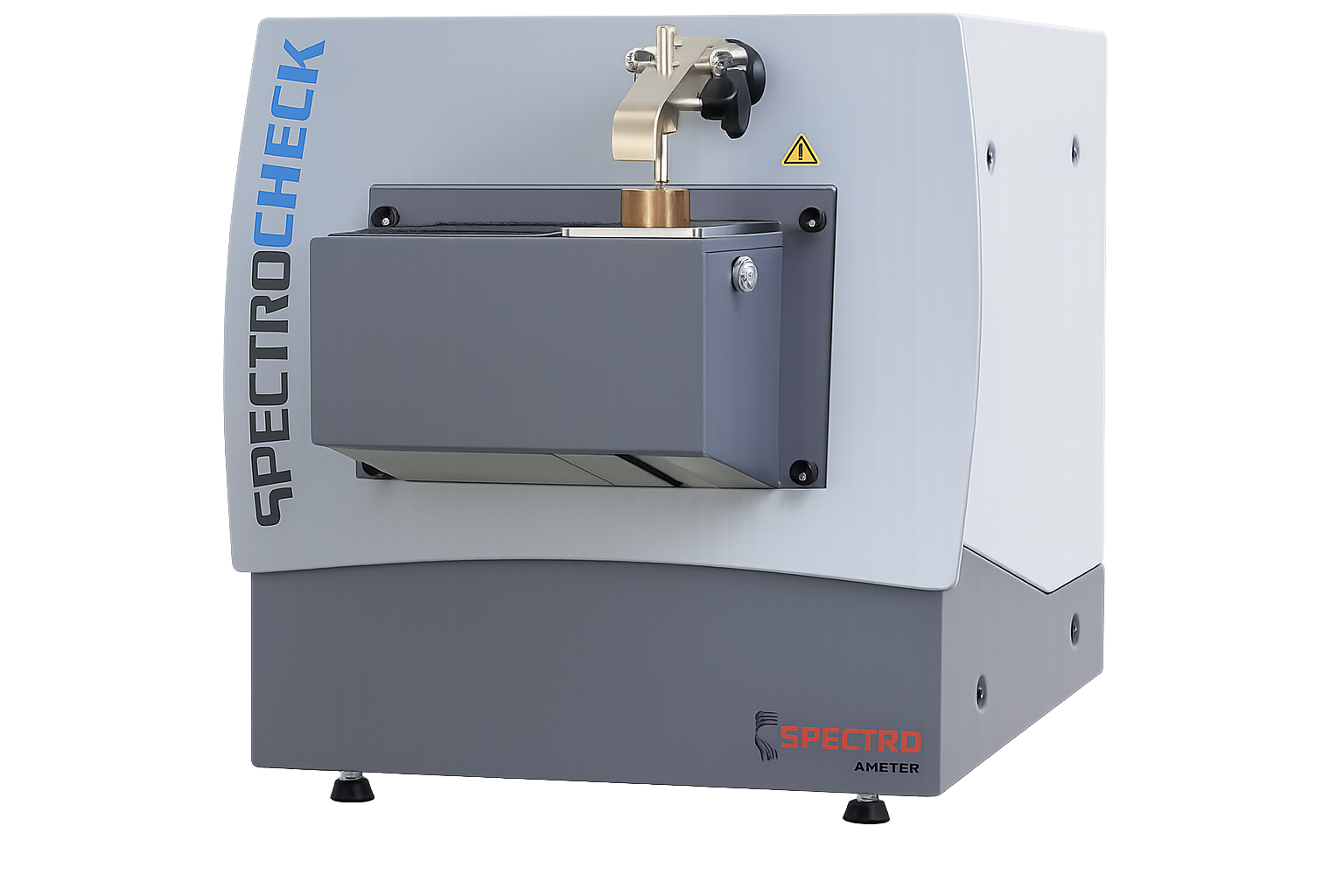
The only way to genuinely confirm whether a material’s chemical composition meets specification is through Positive Material Identification (PMI) via spectrometer, testing the physical part directly rather than relying on a paper declaration. This is exactly why mandatory incoming quality control (IQC) is treated as a non-negotiable checkpoint in rigorous automotive supply chain management. Buyers who skip this step are, in effect, trusting a document over the actual metal that will end up in a moving vehicle.
Why Supplier In-House Spectrometer Testing Matters
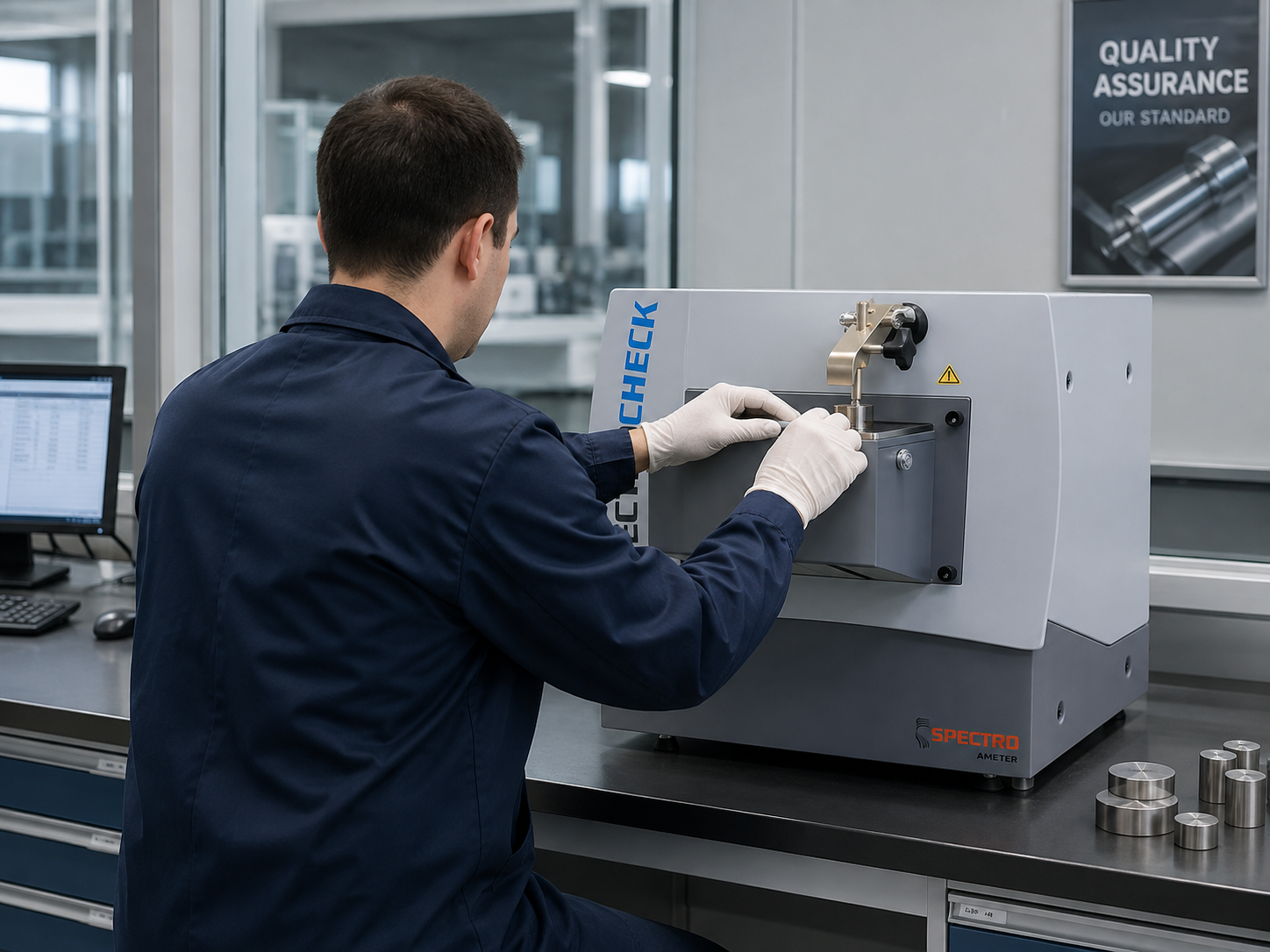
This raises a question that’s often underestimated during procurement decisions: why supplier in-house spectrometer testing matters so much comes down to timing — it determines at what stage material risk can be intercepted. If a supplier lacks in-house testing capability, verification typically falls on the buyer, who must commission a third-party lab, adding both cost and lead time.
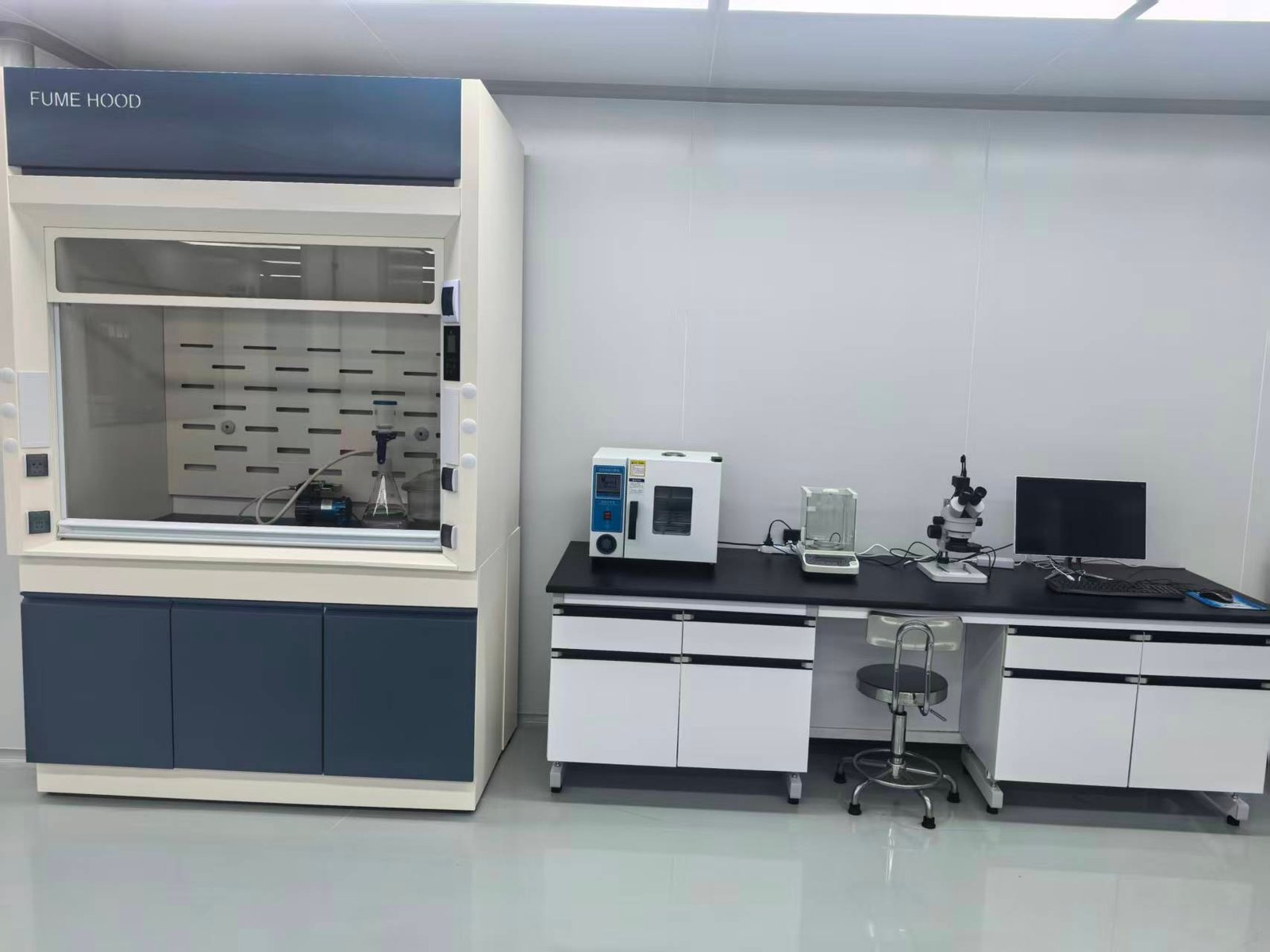
By contrast, when a supplier has an in-house Optical Emission Spectrometer (OES), material verification is completed the moment raw material arrives, or even before the part ships. The customer receives not just the part, but a corresponding material analysis report, meaning the risk of non-compliant material is eliminated before it ever becomes a problem.
Two Measurable Benefits for Customers
- No duplicate verification needed — eliminating the time and cost of commissioning a third-party lab.
- More reliable lead times — production schedules aren’t held hostage by an external lab’s queue.
The Real Difference Between Two Supply Chain Models
| Comparison | Mill Certificate Only | In-House Spectrometry |
|---|---|---|
| Verification method | Paper declaration, unverified | Spectrometer-tested, traceable |
| When risk is caught | Often after a problem occurs | Intercepted on arrival |
| Extra burden on customer | High (own testing required) | Low (report already provided) |
Choosing a Supplier Is Choosing a Risk Management System
Preventing an automotive fastener material mix-up requires controlling risk starting from material verification itself, not fixing it after the fact. The next time you evaluate a supplier, instead of comparing only price and lead time, ask one more question: is your material verification based on a certificate, or on your own spectrometer? This is precisely why supplier in-house spectrometer testing matters — the answer often determines how much supply chain risk you’ll be carrying going forward.
As competition across the automotive supply chain intensifies, the ability to verify material on-site — rather than relying solely on paperwork — is quickly becoming a baseline expectation rather than a differentiator. Suppliers who invest in this capability aren’t just reducing their own risk; they’re removing a recurring cost and delay from their customers’ operations as well.
Excel Components MFG Co., Ltd maintains in-house spectrometer testing capability, with a corresponding material analysis report available for every shipment, giving your QA and procurement teams real material data, reduced risk, and a supply chain that stays stable and efficient.