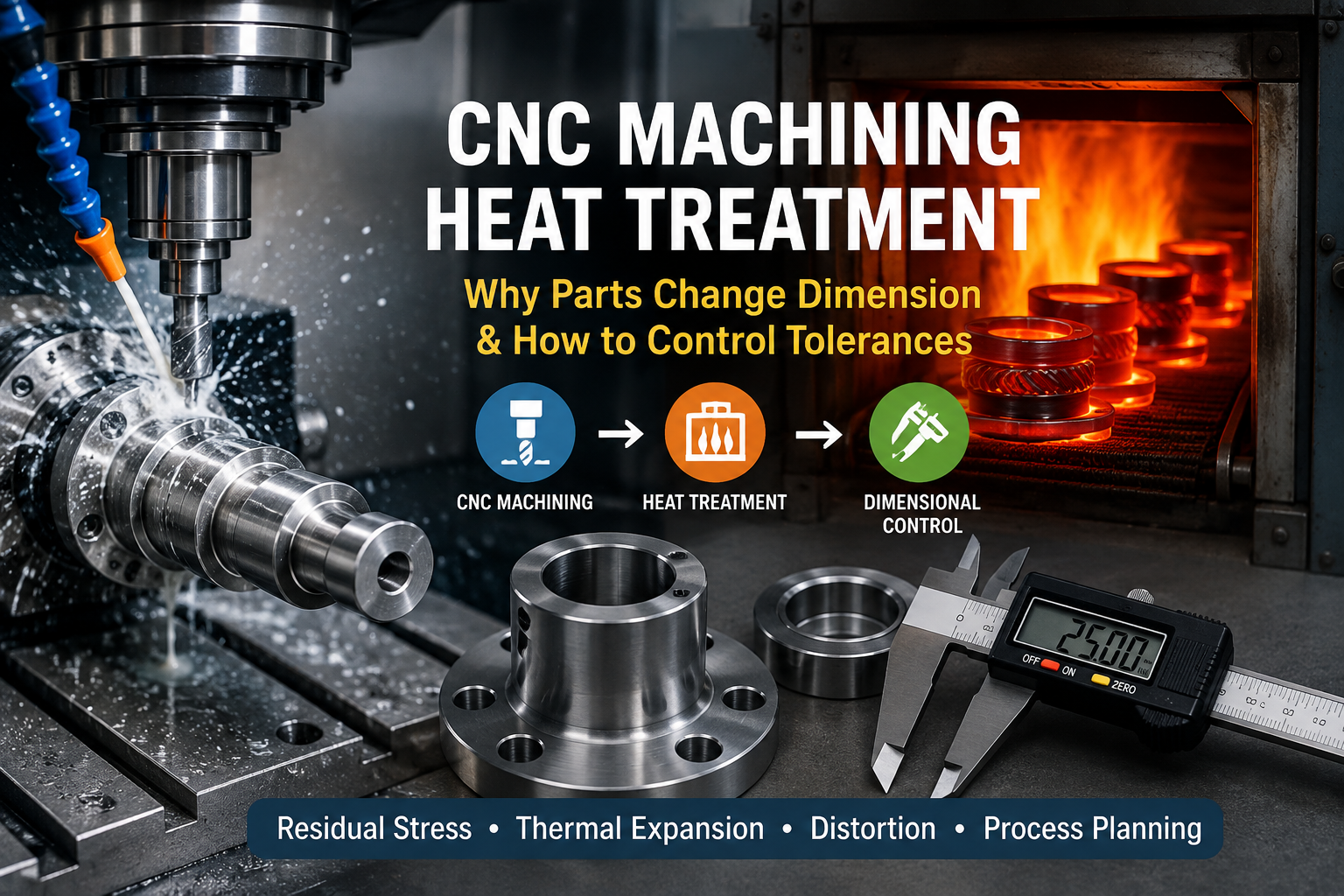






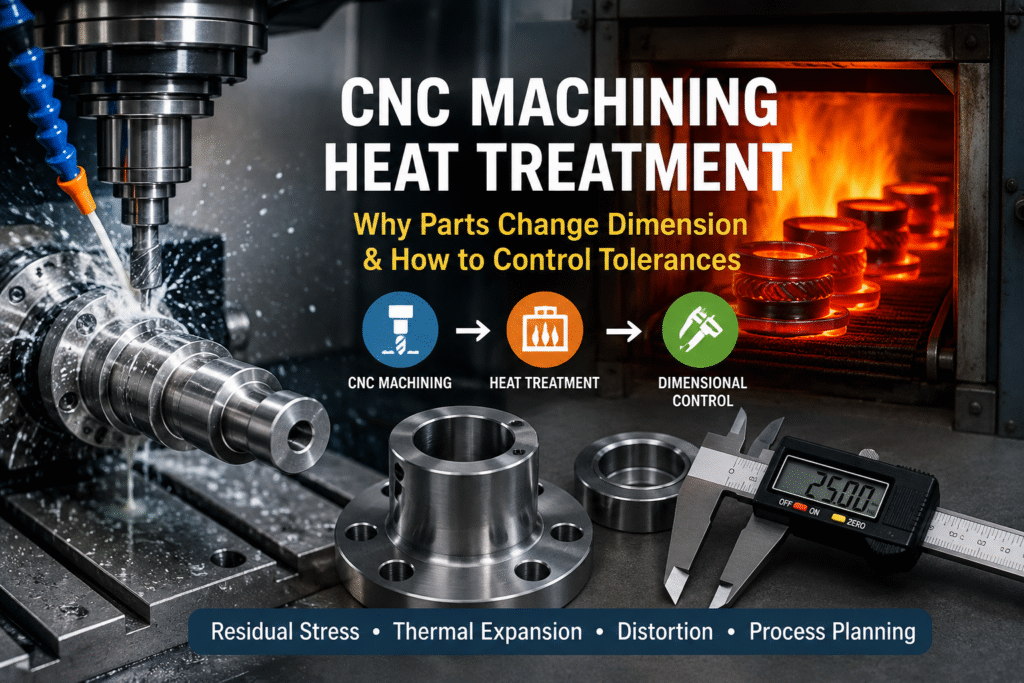
CNC machining heat treatment can cause dimensional changes even when a part is completely within tolerance before heat treatment. This is a common challenge in precision manufacturing, particularly for components with tight tolerances, asymmetrical geometry, or high hardness requirements. Manufacturers must consider not only machining accuracy but also residual stress, thermal expansion and contraction, and changes in material microstructure.
A dimensional change does not necessarily mean that something went wrong during CNC machining or heat treatment. Metals naturally respond to material removal, heating, and cooling, so the key is to anticipate potential dimensional changes and select an appropriate manufacturing sequence before production begins.
Why Can CNC Machining Heat Treatment Cause Dimensional Changes?
Heat treatment does more than increase the hardness of a metal component. During heating, holding, and cooling, the material expands and contracts while its internal stresses and microstructure may also change.
For this reason, CNC machining heat treatment should be evaluated as one continuous manufacturing process rather than as two unrelated operations. A component that meets every drawing requirement before heat treatment may show changes in diameter, flatness, roundness, straightness, or other critical dimensions afterward. These differences may have little effect on parts with general tolerances but can become important when precise assembly fits are required.
Residual Stress Can Move a Part That Was Already Within Tolerance
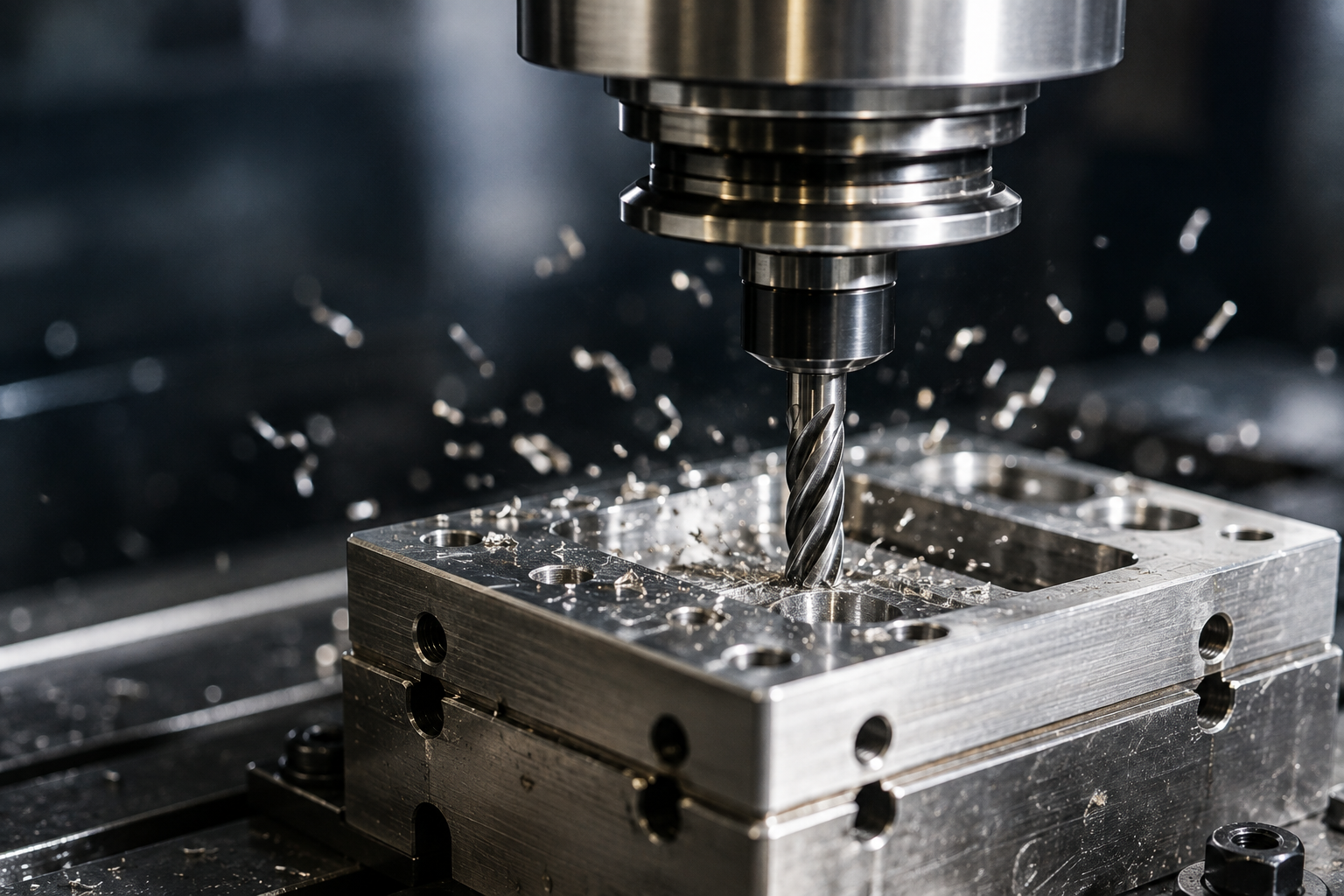
CNC turning, milling, and drilling introduce cutting forces, tool pressure, and heat into the workpiece. These factors may leave residual stress inside the material, particularly when a large amount of material is removed or when material removal is uneven.
Immediately after machining, the part may still measure perfectly within tolerance. During subsequent heat treatment, however, these internal stresses can be released or redistributed. This is one reason why dimensional stability should be considered early when planning a CNC machining heat treatment process.
Heating and Cooling Do Not Always Return a Part to Its Original Size
Metal expands when heated and contracts when cooled, but a component does not necessarily return exactly to its original dimensions. The final result depends on the material grade, treatment temperature, holding time, cooling method, and geometry of the part.
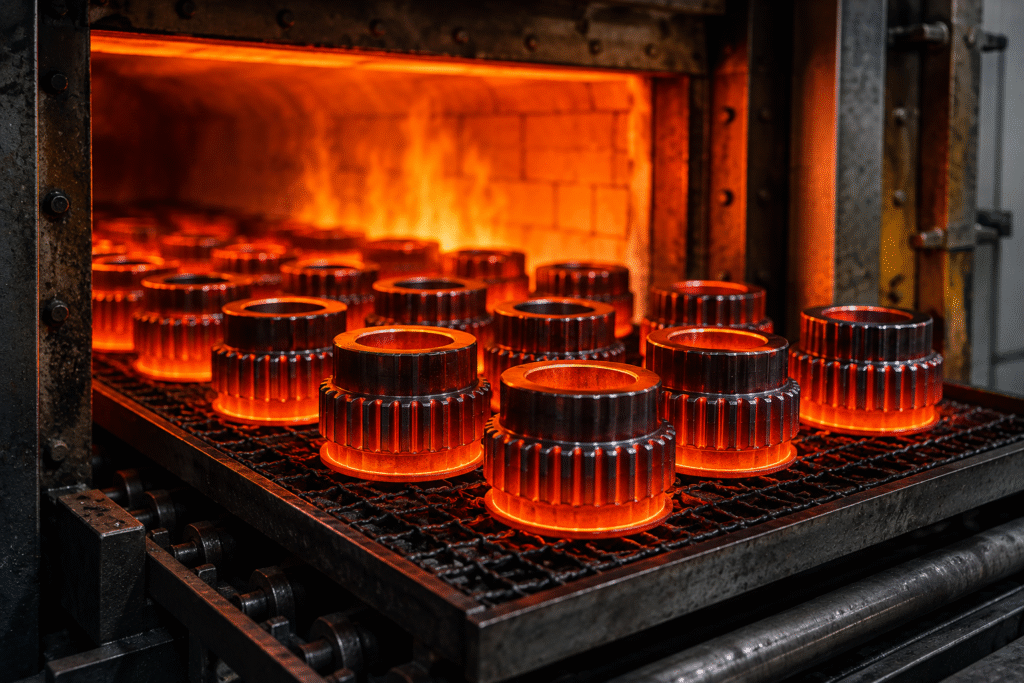
Processes involving rapid cooling, such as quenching, can create additional challenges because the surface and core may cool at different rates. These temperature differences can generate additional stresses and increase the risk of heat treatment distortion.
Changes in Material Microstructure Can Affect Final Dimensions
Heat treatment is commonly used to modify properties such as hardness, strength, and toughness. Hardening, quenching, tempering, annealing, and stress relieving can all change the internal microstructure of a metal.
These transformations may cause small but measurable changes in material volume. Dimensional changes after heat treatment therefore result not only from thermal expansion and contraction but also from phase transformations and redistribution of internal stresses.
For further technical information about distortion, stress generation, and dimensional changes during steel heat treatment, refer to ASM International – Basics of Distortion and Stress Generation during Heat Treatment.
Thin Walls and Uneven Geometry Increase the Risk of Distortion
Not every CNC machined component responds to heat treatment in the same way. Parts with thin walls, long shafts, deep holes, uneven wall thickness, or asymmetrical geometry are generally more sensitive to dimensional distortion.
- Thin-wall components
- Long shafts
- Parts with deep or blind holes
- Uneven wall thickness
- Asymmetrical geometry
- Large differences between thick and thin sections
Different sections of these components can heat and cool at different rates. If one section is significantly thicker than another, uneven contraction during cooling can contribute to warping, bending, or other geometric changes.
There Is No Universal Allowance for Dimensional Change After Heat Treatment
There is no single percentage or dimensional allowance that can be applied to every heat-treated CNC component. The actual amount of change depends on several interacting factors, including the material, part size, geometry, heat treatment method, hardness requirement, and final tolerance.
| Factor | How It Affects Dimensional Stability |
|---|---|
| Material | Different steels and alloys respond differently to heating, cooling, and phase transformation. |
| Part Geometry | Thin walls and uneven sections may heat and cool at different rates. |
| Heat Treatment | Temperature, holding time, and cooling method can influence distortion and residual stress. |
| Tolerance | A dimensional change that is acceptable for one component may cause another part to fall outside tolerance. |
For this reason, relying on a universal distortion percentage can be misleading. For critical dimensions, manufacturers should evaluate the final tolerance, material behavior, and production sequence during the quotation and process-planning stage.
Tight Tolerances May Require Finish Machining After Heat Treatment
For components with relatively generous tolerances, heat treatment may be performed after CNC machining if the expected dimensional changes have already been considered. Parts with tight fits or strict geometric tolerances, however, often require a different approach.
In a CNC machining heat treatment process with tight dimensional requirements, a common manufacturing sequence is Rough Machining → Heat Treatment → Finish Machining. Most of the material is removed during rough machining while sufficient machining allowance is retained, and critical dimensions are then corrected after heat treatment through finish turning, grinding, reaming, honing, or another suitable finishing process.
The Right Process Sequence Helps Reduce Dimensional Risk
Reducing dimensional risk is not simply a matter of improving CNC machine accuracy. Material selection, component geometry, machining sequence, heat treatment method, and final tolerance requirements should be evaluated together.
Review the Material Before Production
Different steels and alloys respond differently to heat treatment. Material selection should therefore consider hardness requirements, dimensional stability, machinability, and the final application of the component.
Leave Machining Allowance on Critical Dimensions
When very tight final dimensions are required, sufficient machining allowance can be retained during rough machining. This provides room to correct dimensional changes during the final machining stage rather than relying on the part to remain unchanged after heat treatment.
Validate the Process Before Mass Production
For high-precision or complex components, prototype or small-batch production can help identify actual dimensional changes before and after heat treatment. These results provide useful data for optimizing the CNC machining heat treatment sequence, machining dimensions, and production parameters before mass production.
Clear Drawing Requirements Prevent Problems Before Production Starts
If a component requires heat treatment, the RFQ or engineering drawing should clearly define the relevant requirements. The more complete the information is, the easier it is for the manufacturer to evaluate process feasibility and determine an appropriate production sequence.
- Material grade
- Heat treatment process
- Required hardness
- Final dimensional tolerances
- Critical dimensions and fits
- Geometric tolerance requirements
- Whether dimensions apply before or after heat treatment
For precision components, process planning can be just as important as CNC machine accuracy. This is especially true when high hardness, tight tolerances, thin walls, and complex geometry are combined in the same component. Reviewing these requirements early also helps determine whether additional finishing operations will be required after heat treatment.
Plan CNC Machining Heat Treatment Before the First Part Is Made
A well-planned CNC machining heat treatment strategy considers material behavior, machining allowance, heat treatment conditions, and final tolerance requirements before production begins. This helps reduce the risk of unexpected dimensional changes and makes it easier to determine where finish machining or additional inspection may be necessary.
CNC machining heat treatment should not be treated as two completely independent manufacturing steps. From material selection and rough machining to heat treatment and final finishing, each stage can influence the final dimensions, dimensional stability, and assembly performance of the component.
If your project requires CNC machining and heat treatment, send us your drawing, material specification, heat treatment requirements, and estimated quantity. Contact Our Engineering Team to discuss machining strategy, critical tolerances, and potential manufacturing risks before production.